

McManus Stories
The Macmanus Family of Chihuahua: Cattle, Commerce, and a Family Story
Research shared by José Castañeda on the Macmanus family, cattle, commerce, and banking in Chihuahua, Mexico.
Shared by José Castañeda, who is researching cattle movements and McManus history in Mexico.
A search for a portrait of Francisco Macmanus opened a window onto a family involved in cattle breeding, trade, and banking in Chihuahua, Mexico. José Castañeda shared historical clippings, photographs, and an archival reference that bring parts of this story into view.
The material follows a family whose name appears as McManus, MacManus, and Macmanus.
A merchant named Francisco
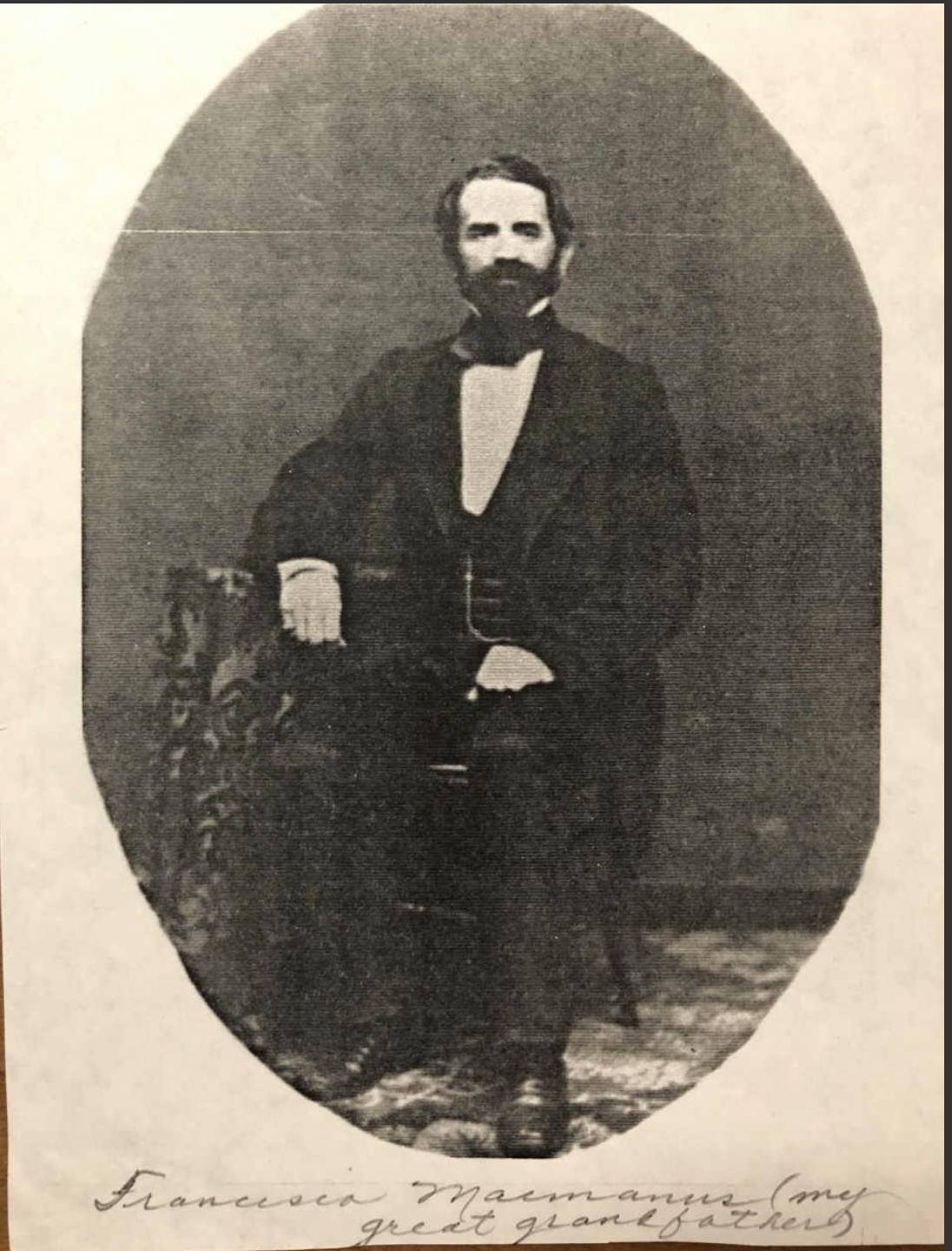
Family research identifies the central figure as Francis, also known as Francisco Macmanus, reportedly born in Pennsylvania and later established in Chihuahua. His precise birth and death dates still need confirmation: the material gives competing birth years of 1813 and 1814, and death dates in 1878 and 1879.
One surviving portrait carries a handwritten caption identifying Francisco Macmanus as the writer’s great-grandfather. The original photograph’s holder and the author of that caption remain to be identified.
Excerpts from Susan Shelby Magoffin’s Down the Santa Fe Trail and into Mexico describe the wagons of a merchant named McMannus in 1846. An accompanying editorial note identifies Frank McManus as a merchant in Mexican trade and describes him sheltering in Chihuahua during the Battle of Sacramento before reopening his store. These passages offer promising evidence for his commercial world, although the full edition and the editor’s sources need to be checked.
Twenty cattle sent to Chihuahua
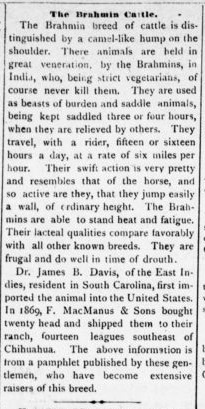
A newspaper clipping headed “The Brahmin Cattle” reports that F. Macmanus & Sons purchased twenty animals in 1869 and shipped them to a ranch fourteen leagues southeast of Chihuahua. The writer says the information came from a pamphlet published by the firm.
José identified the clipping as coming from the Daily Tombstone in 1886. Its masthead and exact issue date are missing from the surviving crop. The year 1869 therefore refers to the reported cattle shipment, not the date of the newspaper.
The report places the firm within the history of zebu cattle in northern Mexico. It does not establish that these were the first such cattle brought to the region, and it does not name the receiving ranch.
The Bachimba connection
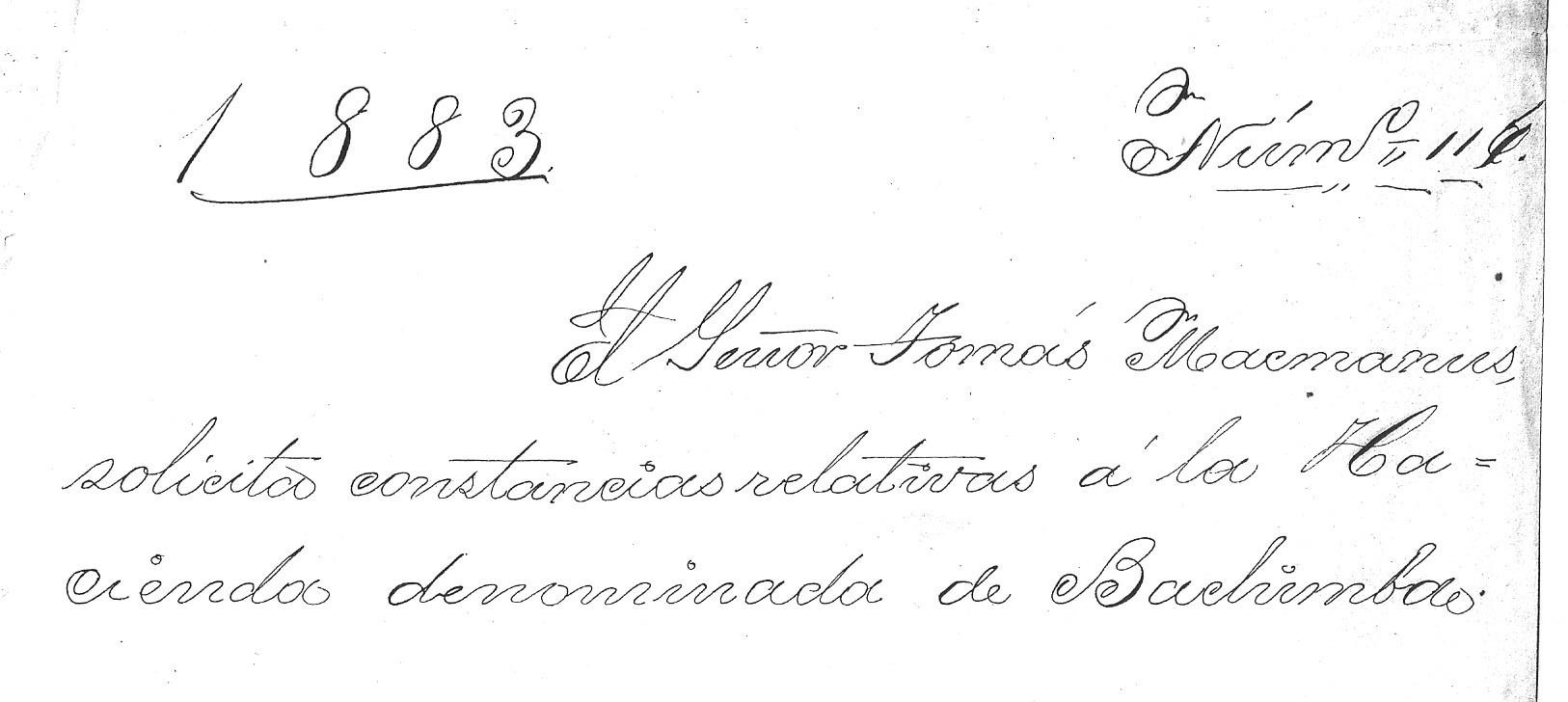
An archive cover dated 1883 provides a more direct link to a named estate. It records that Tomás Macmanus requested certifications concerning Hacienda Bachimba.
José supplied the reference as Fondo Porfiriato y Terracismo, Serie Certificados, Constancias y Permisos, Sección Secretaría, Caja 7, expediente 46, 1883. The complete file could help explain the family’s involvement with the estate. The cover alone does not establish when the property was acquired or whether Bachimba received the cattle described in the newspaper.
Commerce and banking
A collection of Chihuahua directory extracts shows Macmanus names associated with livestock breeding, insurance, groceries, and other businesses. It also includes civic listings and a theatre partnership. The extracts suggest a broad commercial presence, although the original directory and its individual entries still need full identification.
Portraits shared with the research are identified as Ignacio Macmanus and Juan Tomás MacManus. Their banking activities offer another direction for the family story. The banking history collected by Paper Money of Mexico provides biographical leads and references to contemporary records.
A brief newspaper item attributed to The Monticello Herald, 24 December 1891, reports a robbery at F. McManus & Sons in Chihuahua. The surviving copy is damaged, so the amount should not be guessed. Nor does the firm’s continued use of its founder’s name establish that Francisco himself was still alive in 1891.
A story still taking shape
The portraits, cattle report, and Bachimba document provide a starting point for tracing this Macmanus family in Mexico. Further work with Mexican civil and church records, the complete Bachimba file, and the firm’s cattle pamphlet may clarify both the family relationships and the history of its ranching business.
We welcome additional historical records, identified photographs, and corrections that can help develop this account.
With thanks to José Castañeda for sharing his research and historical material. Dates and family connections remain subject to verification.